What do hummingbirds eat?
Ask almost anyone what hummingbirds eat, and the answer comes quickly: sugar water.
And yes, hummingbirds do love sweet things. In the wild, they sip nectar from flowers, and at backyard feeders they visit properly made sugar-water feeders for quick energy. But that is only part of the story.
Hummingbirds are not tiny flower fairies living on dessert alone. They are also fast, fierce little hunters.
Along with nectar, hummingbirds eat small insects and spiders. They snatch tiny bugs out of the air, glean them from plants, and sometimes pluck them from spiderwebs. That protein matters, especially for growing babies. Nectar gives them the energy to power those impossibly fast wings; insects provide the protein and nutrients needed to build a body.
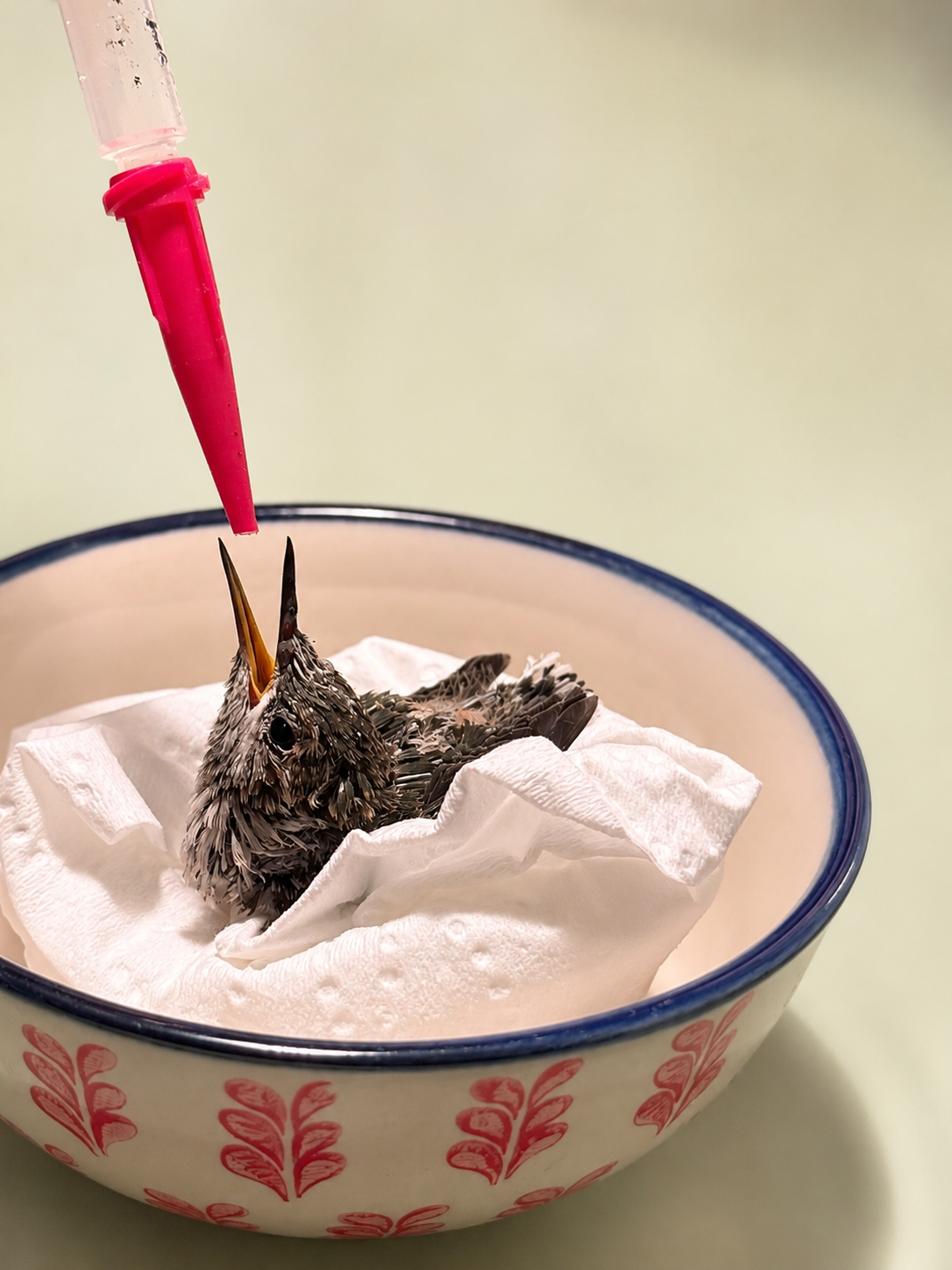
That is why an orphaned baby hummingbird in rehabilitation cannot simply be raised on sugar water.
This little one is being fed a specialized hummingbird formula designed to provide both sides of the diet: the sugars that mimic the quick energy of nectar, plus the protein and nutrition a baby would normally receive from the insects brought by a parent. It is carefully prepared, carefully offered, and adjusted to the needs of a very small, very delicate patient.
Baby hummingbirds are tiny, but their needs are enormous. Their bodies are built for one of the most demanding lifestyles in the bird world. Even as adults, hummingbirds burn energy at an astonishing rate. Their wings beat so fast they create the familiar hum that gives them their name. They can hover, fly backward, and make sharp mid-air adjustments that look almost unreal.
A few favorite hummingbird facts:
Hummingbirds are the only birds that can truly hover in place.
They can fly backward.
Their bills are not straws. They use a specialized tongue to lap up nectar.
They eat insects, spiders, and other tiny arthropods for protein.
Their nests are often made with plant down and spider silk, allowing the nest to stretch as the babies grow.
They may look delicate, but they are bold, territorial, and incredibly athletic.
This orphan may be small enough to fit in the palm of a hand, but everything about a hummingbird is intense: the metabolism, the movement, the feeding schedule, the precision of care. Rehabilitation is not just “give it sugar water and hope.” It is a careful attempt to replace, as closely as possible, what a wild hummingbird parent would provide.
So the next time you see a hummingbird at a flower or feeder, remember: you are not just watching a nectar sipper.
You are watching a glittering, hovering insect hunter with a sweet tooth.